Studio

EA Intelligence Suite

Stay current. Decide faster.

EA Intelligence automatically curates today's most relevant news for enterprise architects, covering AI strategy, cloud platforms, architecture standards, integration patterns, and governance. Updated daily from trusted sources, so you always walk into the room informed.

What does today's news mean for your architecture?

Ask EA Advisor to analyze the stories below and surface the decisions, risks, and 90-day actions most relevant to your portfolio.

Updated 2026-08-13 04:49:10Z Cached pull 5 shown of 20 stories scanned

Enterprise Architect Signals

Signals shown: 5 · Priority domains: 5 · Sources scanned: 9

Pressure domains tied to supporting evidence and lead stories for immediate C-suite briefings.

Top stories

AI‑enabled selection of engaging, strategic pieces of interest to enterprise architects and Chief Technology Officers.

EA decision digest · what to act on this week

Three architect-grade decisions implied by today's signal sweep.

Agentic AI operating model

Decision: Whether to standardize one agent operating stack with policy gates.

Enterprise IT investment and value realization

Decision: How to tie architecture bets to measurable value, cost envelope, and delivery outcomes.

Cloud platform resilience and sovereignty

Decision: How to engineer resilience and compliance without excessive complexity.

Capacity development questions for the next cycle

  • Which Global South markets should shape our architecture roadmap over the next 12 months, and why?
  • How do we adapt platform, data, and AI controls for region-specific regulation and infrastructure constraints?
  • Which cross-region innovation partnerships can accelerate inclusive adoption beyond North America and Europe?
  • Which skills and team capabilities are missing to execute on agentic ai operating model in the next 12 months?
Open governance export

LLM chat

Live LLM

Click any pressure domain above to run Ask EA Advisor here. Use AI Workbench only when you need deeper drafting.

Processing request

Start here

Your outcome in 2 minutes: identify the top pressure, draft a decision-ready response, and export a committee-ready brief.

Path: Signal Desk → AI Workbench → Strategy View.

Choose your mode

Signal Desk finds what matters now. AI Workbench turns it into action. Strategy View packages the executive narrative.

Step 1 · Set focus

Set the decision context once. It propagates across signal, workbench, and export.

How this works: set focus, scan five lead signals, then move to AI Workbench or Strategy View.

Step 2 · Why this matters

Subscribe RSS

You already saw the top signals above. This step turns that scan into a decision path.

Coverage in this pull: 20 stories from 9 sources, with 5 prioritized for review.

Next step

Choose one action now: draft an answer, or open the strategy rationale.

Show source list and advanced sweeps
  1. Reducing Text2SQL latency with parameterized query templates

    2026-08-13 · AWS Architecture Blog · credibility 4/5

  2. Serve Qwen3.8-2.4T-A95B, a 2.4T-Parameter Model, with Configurable Reasoning on NVIDIA GB300 NVL72

    2026-08-12 · NVIDIA Technical Blog · credibility 4/5

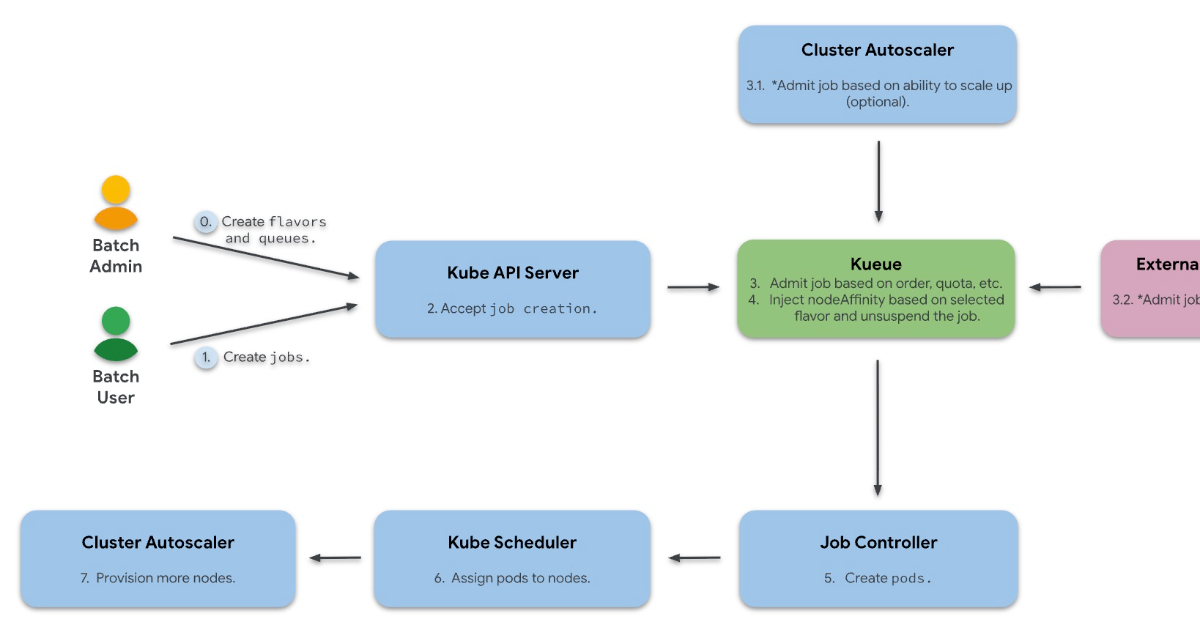
  3. Netflix Adopts Cloud-Native Job Queueing System Kueue to Replace an In-House Solution

    2026-08-12 · InfoQ Architecture · credibility 3/5

  4. Good apps aren’t born, they’re guided: Building observable policy as code

    2026-08-12 · CNCF Blog · credibility 3/5

  5. “Issue tracking is dead”; How the pull request became the last chokepoint in the SDLC bottleneck

    2026-08-12 · The New Stack · credibility 3/5

Governance and Export
Export intelligence outputs
Mandate recap and expansion
  • Track top 5 current trends relevant to EA, CTO, and AI-enabled enterprise transformation.
  • Use neurosymbolic grounding posture: ontology constraints first, neural synthesis second.
  • Map trends to TOGAF controls and institution-grade governance checkpoints.
  • Provide concise decision framing: driver, risk, opportunity, investment, and failure modes.
  • Surface IFI-focused concerns: four Cs, sovereignty, auditability, and affordable small-AI paths.
  • Enable trusted LLM Q&A that distinguishes fact, evidence, and hypothesis.
RSS endpoint
/intelligence/rss.xml
One-page committee brief preview

EA Intelligence One-Page Brief

Recommendation

Prioritize agentic ai operating model as the lead modernization track, with explicit governance, cost, and evidence controls as entry criteria for production scale.

Executive signal

Enterprise architecture and CTO leaders are now operating in a short decision half-life. The strongest current signal is agentic ai operating model, but the structural takeaway is broader: winning organizations are converting experimentation into governed, reusable capability with clear controls, measurable value, and explicit investment trade-offs.

Grounding posture

Architecture assertions in this view are evidence-grounded and freshness-scored. They are not promoted to validated model facts without SHACL-validated ontology ingestion.

Top 5 trends with decision parameters

Trend Driver Risk Opportunity Investment parameter Horizon
Agentic AI operating model Whether to standardize one agent operating stack with policy gates. Uncontrolled agent sprawl and inconsistent governance posture. Faster automation throughput with reusable guardrailed patterns. Platform engineering capacity, identity controls, evaluation pipelines. 0-12 months
Enterprise IT investment and value realization How to tie architecture bets to measurable value, cost envelope, and delivery outcomes. Technology spend grows faster than realized enterprise value. Sharper portfolio prioritization across hardware, software, AI, and data programs. Value-metric instrumentation, portfolio governance, and stage-gate funding controls. 0-18 months
Cloud platform resilience and sovereignty How to engineer resilience and compliance without excessive complexity. Outage concentration and control weaknesses in critical workloads. Higher service continuity and regulator confidence. Platform reliability engineering, DR automation, policy-as-code controls. 6-24 months
AI governance, security, and FinOps How to enforce policy, identity, and cost controls in one operating model. Regulatory and financial exposure from unmanaged AI usage. Predictable AI economics and defensible board-level governance. Observability, cost telemetry, red-team controls, identity hardening. 0-18 months
RAG trust and knowledge reliability How to guarantee citation quality, freshness, and policy-safe retrieval. Hallucinations or stale recommendations used in executive decisions. Trusted copilots with auditable evidence chains and faster research cycles. Content pipelines, metadata hygiene, retrieval observability, offline tests. 0-9 months

CTO and enterprise architect issues now

  • Scaling agentic AI without fragmenting governance: Choose an enterprise agent platform baseline and policy enforcement model.. EA implication: Define reference architecture and lifecycle controls for agent products.
  • Aligning resilience, sovereignty, and platform complexity: Decide where to centralize vs federate critical platform controls.. EA implication: Map reliability patterns to workload criticality and compliance class.
  • Making AI economics board-visible and predictable: Define unit-economics targets and controls for AI products.. EA implication: Add cost/performance trade-off checkpoints to architecture review.
  • Containing architecture debt while modernizing integration: Set enterprise integration target-state and migration sequencing.. EA implication: Codify API/event standards and anti-corruption boundaries.
  • Guaranteeing trusted enterprise knowledge for AI decisions: Set quality and evidence standards for knowledge-backed AI outputs.. EA implication: Embed provenance requirements into architecture governance gates.

Decision horizon (next 90 days)

  • Decide governance and investment stance for: Agentic AI operating model.
  • Decide governance and investment stance for: Enterprise IT investment and value realization.
  • Decide governance and investment stance for: Cloud platform resilience and sovereignty.

Four-Cs diagnostic and small-AI path

  • Binding constraint: Context
  • Invest in governed knowledge quality, lineage, and source freshness telemetry.
  • Elevate data stewardship and semantic taxonomy controls as architecture dependencies.
  • Small-AI path: Favor affordable, robust, locally-runnable patterns before frontier-scale deployments unless measurable value and controls justify the spend.

Failure modes to monitor

  • Agent sprawl without ownership and identity boundaries.
  • Unbounded token costs from weak routing/caching controls.
  • Evidence drift when source freshness is not monitored.

Sources used

  • [S1] AWS Architecture Blog - Reducing Text2SQL latency with parameterized query templates (https://aws.amazon.com/blogs/architecture/reducing-text2sql-latency-with-parameterized-query-templates/)
  • [S2] NVIDIA Technical Blog - Serve Qwen3.8-2.4T-A95B, a 2.4T-Parameter Model, with Configurable Reasoning on NVIDIA GB300 NVL72 (https://developer.nvidia.com/blog/serve-qwen3-8-2-4t-a95b-a-2-4t-parameter-model-with-configurable-reasoning-on-nvidia-gb300-nvl72/)
  • [S3] InfoQ Architecture - Netflix Adopts Cloud-Native Job Queueing System Kueue to Replace an In-House Solution (https://www.infoq.com/news/2026/08/netflix-kueue-kubernetes-batch/?utm_campaign=infoq_content&utm_source=infoq&utm_medium=feed&utm_term=Architecture+%26+Design)
  • [S4] CNCF Blog - Good apps aren’t born, they’re guided: Building observable policy as code (https://www.cncf.io/blog/2026/08/12/good-apps-arent-born-theyre-guided-building-observable-policy-as-code/)
  • [S5] The New Stack - “Issue tracking is dead”; How the pull request became the last chokepoint in the SDLC bottleneck (https://thenewstack.io/coderabbit-agentic-change-management-review/)
CTO and enterprise architect issues now
  • Scaling agentic AI without fragmenting governance

    Why now: Good apps aren’t born, they’re guided: Building observable policy as code

    CTO decision: Choose an enterprise agent platform baseline and policy enforcement model.

    EA implication: Define reference architecture and lifecycle controls for agent products.

  • Aligning resilience, sovereignty, and platform complexity

    Why now: How to Pretty-Print Your Kubernetes YAML as KYAML and Why You'd Want To

    CTO decision: Decide where to centralize vs federate critical platform controls.

    EA implication: Map reliability patterns to workload criticality and compliance class.

  • Making AI economics board-visible and predictable

    Why now: Reducing Text2SQL latency with parameterized query templates

    CTO decision: Define unit-economics targets and controls for AI products.

    EA implication: Add cost/performance trade-off checkpoints to architecture review.

  • Containing architecture debt while modernizing integration

    Why now: Gateway API v1.6: TCPRoute and UDPRoute Graduate to Standard

    CTO decision: Set enterprise integration target-state and migration sequencing.

    EA implication: Codify API/event standards and anti-corruption boundaries.

  • Guaranteeing trusted enterprise knowledge for AI decisions

    Why now: How to Choose Full-Stack Observability for NVIDIA AI Factories

    CTO decision: Set quality and evidence standards for knowledge-backed AI outputs.

    EA implication: Embed provenance requirements into architecture governance gates.

Neurosymbolic grounding posture

Neural intuition proposes; symbolic governance disposes.

  • Ontology: ArchiMate-4-centered OWL/RDF with optional FIBO alignment for financial semantics.
  • Constraints: SHACL validation is the admission gate for architecture facts.
  • Vocabulary: SKOS concept governance for cross-unit terminology normalization.
  • GraphRAG: Graph-grounded retrieval preferred; vector retrieval treated as entrypoint only.